
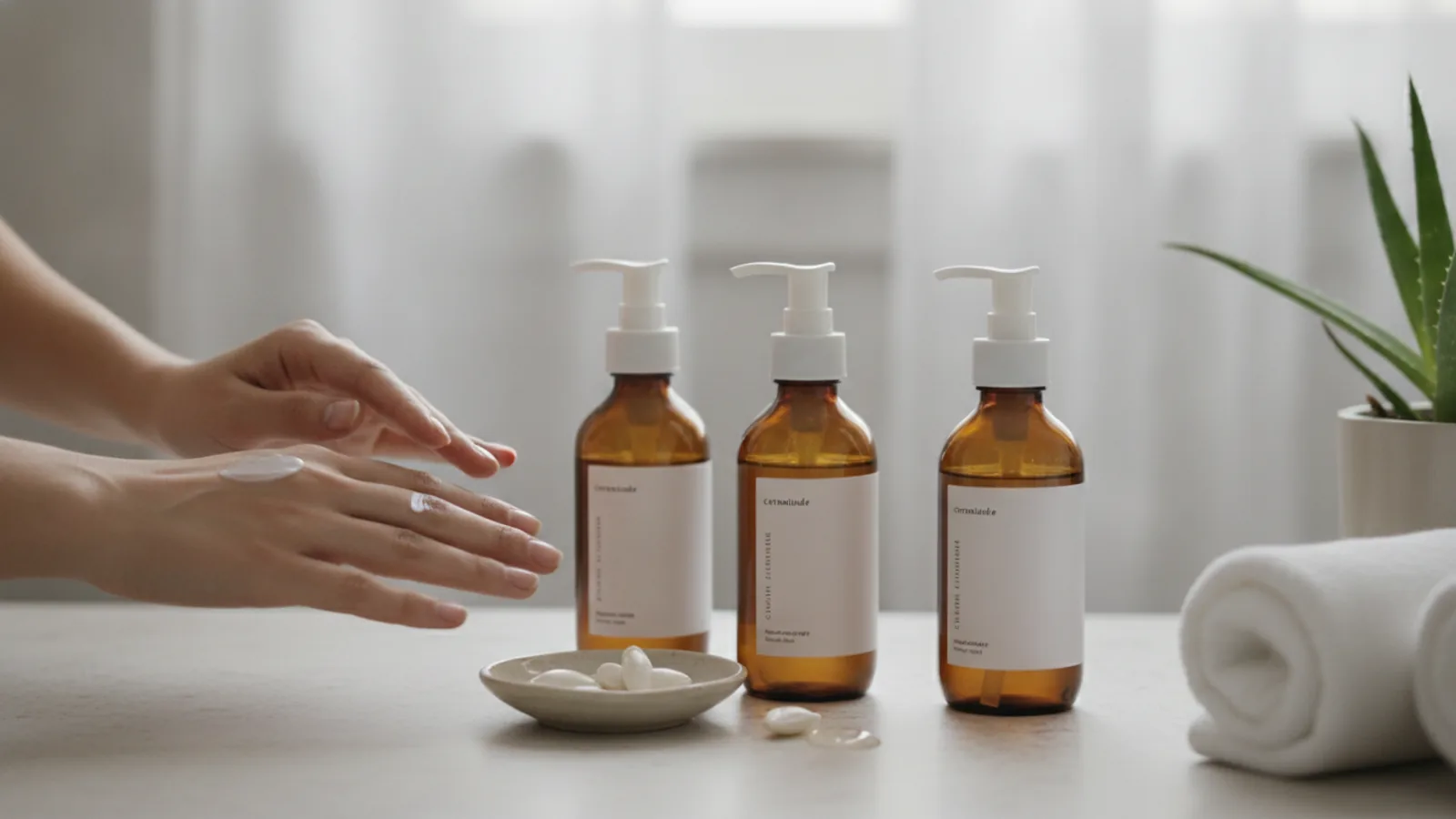
Ceramides For A Damaged Skin Barrier
If your skin feels tight, red, flaky, or unusually sensitive, you might be dealing with a damaged skin barrier. This guide provides a gentle, step-by-step process for using ceramides to help calm, soothe, and restore your skin. Think of this as a reset button for your complexion, helping you rebuild its natural defenses for a healthier, more comfortable feel. We'll walk through how to choose the right type of product and integrate it into a simple, effective routine.
Fast Answer
- Key Action: Consistently apply a ceramide-rich product to clean, slightly damp skin.
- Main Goal: Replenish the skin's natural lipids to restore its protective function.
- Best Time: Morning and evening, immediately after gentle cleansing.
Before You Start
Preparing for this routine is less about buying new things and more about simplifying what you already do. The goal is to create a calm environment where your skin can focus on healing, supported by the key ingredient: ceramides.
What You Need
- A gentle, pH-balanced cleanser: Look for a cleanser that leaves your skin feeling soft, not stripped or squeaky-clean. Cream, milk, or gel formulas are often good choices.
- A ceramide-rich product: This can be a serum, lotion, or cream. For a very damaged barrier, a thicker cream is often the most comforting choice. Check the ingredient list for terms like "Ceramide NP," "Ceramide AP," "Ceramide EOP," or "Phytoceramide."
- A broad-spectrum sunscreen (SPF 30+): This is non-negotiable. Sun exposure can weaken the skin barrier, and a damaged barrier is more vulnerable to sun damage.
- (Optional) A simple hydrating toner or essence: A product with ingredients like glycerin or hyaluronic acid can provide an extra layer of hydration before you apply your ceramides.
Safety, Timing, or Context Checks
Before you add anything new, it's important to understand your skin's current state. A damaged skin barrier can be thought of as a brick wall where the mortar has crumbled. The bricks (your skin cells) are still there, but without the mortar (lipids like ceramides), gaps form. These gaps let moisture escape and allow irritants to get in. Your goal is to gently re-apply that mortar.
Step-by-Step Instructions
Follow these steps consistently to give your skin the best chance to repair itself. Patience is just as important as the products you use.
Assess Your Skin's Condition
Take a moment to truly look at and feel your skin. Understanding your starting point helps you track progress. A compromised barrier often shows one or more of these signs:
- Redness: Persistent, blotchy redness that isn't related to a specific breakout.
- Tightness: A feeling of pulling or discomfort, especially after cleansing.
- Sensitivity: Products that never bothered you before suddenly sting or burn.
- Flaking or Peeling: Dry, rough patches that don't go away with your usual moisturizer.
- Dullness: A lack of radiance or a tired, dehydrated appearance.
Acknowledging these signs confirms that a gentle, barrier-focused approach is the right path forward.
Simplify Your Current Routine
Before adding ceramides, you must first remove potential irritants. For the next few weeks, put away any harsh or potent products. This is a temporary pause to give your skin a break.
Stop using:
- Chemical exfoliants (like glycolic, lactic, and salicylic acids).
- Physical scrubs and brushes.
- High-concentration retinoids (prescription or over-the-counter).
- Vitamin C serums (especially high-strength L-ascorbic acid).
- Cleansing tools with rough bristles.
Your "reset" routine should be just three simple steps: gentle cleanser, ceramide moisturizer, and (in the morning) sunscreen. That's it. This minimalist approach reduces the variables and lets the ceramides do their work without interference.
Cleanse Gently, Without Stripping Your Skin
How you wash your face is critical. The goal is to clean the skin, not strip it of its natural oils. Use lukewarm water—hot water can be very drying and irritating to a compromised barrier. Dispense a small amount of your gentle cleanser into your palms and massage it onto your face with your fingertips for about 30-60 seconds. Rinse thoroughly but gently, and pat your skin dry with a soft, clean towel. Do not rub.
Apply Your Ceramide Product to Damp Skin
This is the most important step. Immediately after cleansing, while your skin is still a little damp, apply your chosen ceramide product. Moisturizers and serums are most effective when applied to damp skin because they can trap that surface water and pull it into the skin, preventing it from evaporating. This technique enhances hydration and helps the active ingredients penetrate more effectively.
Use a pea-sized amount for a serum or a nickel-sized amount for a moisturizer. Warm it between your fingertips for a moment and then gently press or massage it into your skin, covering your entire face and neck.
Layer Products Correctly (If Applicable)
If you're using more than one product in your simplified routine (like a hydrating toner plus a ceramide cream), the order matters. Always apply products from the thinnest consistency to the thickest. This allows each product to be absorbed properly.
A sample routine would look like this:
- Gentle Cleanser (rinse and pat, leave damp)
- Hydrating Toner (if using, apply immediately)
- Ceramide Serum (if using, apply while skin is still damp from toner)
- Ceramide Moisturizer (apply over serum or on its own)
- Sunscreen (morning routine only, as the final step)
Protect Your Progress with Sunscreen Every Morning
You cannot repair a damaged skin barrier without daily sun protection. UV radiation generates free radicals that break down the skin's structure and lipids, directly undermining your efforts. Even on cloudy days or when you're indoors near a window, UV rays can affect your skin.
Make a broad-spectrum sunscreen with at least SPF 30 the final step of your morning routine, every single day. Apply a generous amount to your face, neck, and any other exposed skin about 15 minutes before you go outside. Mineral sunscreens containing zinc oxide or titanium dioxide are often better tolerated by sensitive, compromised skin.
Be Consistent and Patient
A damaged skin barrier did not happen overnight, and it won't be repaired overnight. The skin's natural renewal cycle takes about 28 days, and it may take one to two full cycles to see significant, lasting improvement. The key is unwavering consistency.
Perform your gentle, ceramide-focused routine every morning and every night without skipping. Resist the temptation to try a new product or re-introduce an exfoliant too soon. Listen to your skin. The first signs of healing are often subtle: a little less tightness, a slight reduction in redness, or the simple feeling of your skin being more comfortable.
Quick Reference
| Situation | Use this | Why |
|---|---|---|
| Very dry, tight, or flaky skin | A rich ceramide cream | It provides intense moisture and a protective layer to prevent water loss (transepidermal water loss). |
| Skin is irritated but also acne-prone | A lightweight ceramide lotion or gel-cream | It delivers barrier support without the heavy oils that might clog pores or feel greasy. |
| Almost every product stings | A minimal-ingredient ceramide moisturizer | It reduces the risk of further irritation from common additives like fragrance, essential oils, or dyes. |
| Skin feels dehydrated but not dry | A ceramide serum layered under a simple moisturizer | The serum provides a concentrated dose of ceramides while the moisturizer locks in hydration. |
Common Problems When You Use Ceramides For A Damaged Skin Barrier
Even with a gentle approach, you might encounter a few bumps along the road. Here’s how to troubleshoot common issues.
Problem: My skin feels heavy, greasy, or is breaking out.
The Fix: The formula of your ceramide product might be too rich for your skin type. Ceramides themselves are not typically pore-clogging, but the base cream or lotion they're in could be. If you're experiencing congestion, switch to a more lightweight option, like a gel-cream or a serum. Ensure the product is labeled "non-comedogenic."
Problem: It's been a week and I don't see any difference.
The Fix: Patience is essential. It takes the skin weeks, not days, to repair its lipid matrix. Give your routine at least 4 weeks of consistent use before judging its effectiveness. Also, double-check that you've removed all other potential irritants. Are you using hot water? Is your pillowcase clean? Are you accidentally using a harsh cleanser?
Problem: My skin still stings when I apply the ceramide product.
The Fix: If your skin stings upon application, your barrier is likely severely compromised. First, ensure the product is fragrance-free. If it is, your skin may need even more support. Look for a product that combines ceramides with other soothing ingredients like niacinamide, panthenol (vitamin B5), colloidal oatmeal, or madecassoside (from Centella Asiatica). These can help calm inflammation while the ceramides work on rebuilding.
Advanced Tips for Ceramides For A Damaged Skin Barrier
Once your skin feels calmer and you've established a consistent routine, you can explore these tips to enhance the healing process.
Look for a "Barrier Complex"
Ceramides are fantastic, but they work as part of a team. The skin's natural barrier is made of a specific ratio of ceramides, cholesterol, and free fatty acids. Some of the most effective products will include all three of these ingredients to more closely mimic the skin's natural structure. Check the ingredient list for cholesterol and fatty acids (like linoleic acid) alongside ceramides for an extra boost.
Try the "Slugging" Technique at Night
For very dry or irritated skin, "slugging" can be a game-changer. After applying your ceramide moisturizer at night, apply a very thin layer of an occlusive product, like petroleum jelly or an ointment designed for healing. This creates a physical seal on top of your skin, preventing water loss overnight and protecting your skin while it heals. This is best for dry skin types; if you are acne-prone, patch-test this on a small area first.
Support Your Skin from the Inside
Topical care is primary, but lifestyle habits play a supporting role. Ensure you are drinking enough water throughout the day to stay hydrated. Additionally, a diet rich in essential fatty acids (found in foods like salmon, walnuts, and flaxseed) can provide the building blocks your body needs for healthy skin function.
Ceramides For A Damaged Skin Barrier FAQ
What exactly are ceramides?
Ceramides are a class of fatty acids called lipids. They are a major component of your skin's outer layers, making up about 50% of its composition. Think of them as the "mortar" that holds your skin cells (the "bricks") together. This mortar creates a protective barrier that keeps moisture in and harmful environmental elements out.
Can I use ceramides with other active ingredients like Vitamin C or retinol?
Yes, eventually! But it's crucial to wait until your skin barrier feels fully repaired (no more stinging, redness, or tightness). Once your skin is healthy, ceramides are excellent partners for stronger actives. They can help your skin tolerate ingredients like retinoids and exfoliants by buffering potential irritation and preventing them from drying out your skin.
How can I tell my skin barrier is healing?
You'll notice a gradual decrease in the negative symptoms. Key signs of a healing barrier include: less redness and reactivity, your skin feeling comfortable and supple instead of tight, a reduction in flakiness, and the ability to apply products without any stinging sensation. Your skin will also start to look more hydrated and have a healthy, calm glow.
Are more expensive ceramide products better?
Not necessarily. The effectiveness of a ceramide product depends on its formulation, the concentration of ceramides, and whether it includes other supportive ingredients—not its price tag. Many affordable, drugstore brands offer exceptionally well-formulated ceramide moisturizers that are gentle and effective.
Final Checklist for Ceramides For A Damaged Skin Barrier
Use this checklist to stay on track as you work to restore your skin. A calm, consistent approach is your surest path to a healthy barrier.
- Have you simplified your routine to a gentle cleanser, ceramide product, and sunscreen?
- Did you temporarily pause all harsh exfoliants, scrubs, and high-strength actives?
- Are you cleansing with lukewarm water and patting your skin gently dry?
- Do you apply your ceramide product to slightly damp skin for better absorption?
- Are you protecting your skin with a broad-spectrum SPF 30+ every single morning?
- Are you being patient and giving your skin at least four weeks to show improvement?