
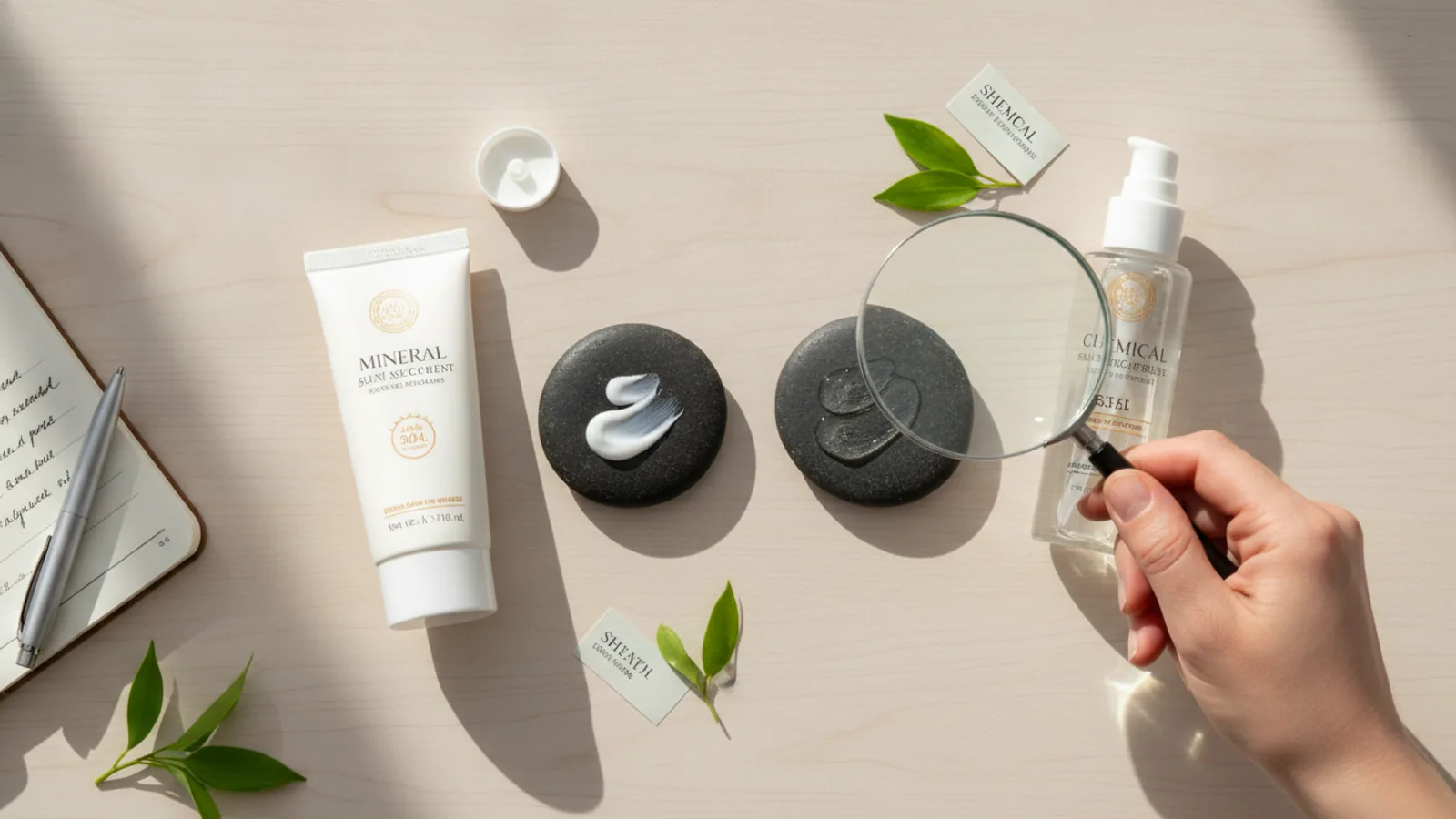
How To Compare Sunscreen Formulas
Choosing the right sunscreen can feel overwhelming with so many options on the shelf. This guide simplifies the process by teaching you how to read a sunscreen label and understand what really matters. By learning to compare formulas based on SPF, active ingredients, and your own skin's needs, you can confidently pick a sunscreen that provides effective protection and feels comfortable to wear every day. This is for anyone who wants to make a clear, informed decision for their skin health.
Fast Answer
- SPF Level: Look for SPF 30 or higher.
- UV Protection: Ensure it says "Broad Spectrum" to block both UVA and UVB rays.
- Ingredients: Choose between mineral (zinc, titanium) and chemical filters.
- Skin Type: Match the formula (lotion, gel) to your skin (oily, dry, sensitive).
- Activity Level: Check for water resistance (40 or 80 minutes) if you'll be active.
Before You Start
- Know your skin type (e.g., oily, dry, sensitive, combination, acne-prone).
- Consider your typical daily activities (e.g., indoors near a window, exercising outside, swimming).
- Have access to sunscreen labels, either in a store or on a product website.
Step-by-Step Instructions
Start with the SPF Number
The first thing most people look for is the SPF, or Sun Protection Factor. This number primarily measures how well the sunscreen protects you from UVB rays, which are the main cause of sunburn. For daily use, dermatologists recommend choosing a sunscreen with an SPF of 30 or higher.
An SPF 30 blocks about 97% of UVB rays, while an SPF 50 blocks about 98%. While the increase in protection is small, a higher SPF can provide a greater margin of safety, especially if you don't apply enough sunscreen. However, no sunscreen can block 100% of the sun's rays. Consistent application is more important than an ultra-high SPF number.
Confirm It's "Broad Spectrum"
Sunlight contains two types of harmful rays: UVB (burning) and UVA (aging). While SPF measures UVB protection, you need to be protected from both. UVA rays penetrate the skin more deeply, contributing to premature wrinkles, fine lines, and skin cancer. This is where the term "Broad Spectrum" comes in.
A sunscreen labeled "Broad Spectrum" has been tested and proven to protect against both UVA and UVB rays. This is a non-negotiable feature for any sunscreen you choose. The FDA regulates this term, so you can trust that a product with this label offers comprehensive protection.
Choose Your Filter Type: Mineral vs. Chemical
Sunscreen works using active ingredients called UV filters. These fall into two main categories: mineral and chemical. Neither is universally "better"—the best one depends on your skin type and personal preference.
Mineral sunscreens use active ingredients like Zinc Oxide and Titanium Dioxide. These minerals sit on the surface of your skin and create a physical barrier that reflects and scatters UV rays. They are often recommended for sensitive, reactive, or acne-prone skin because they are less likely to cause irritation. They work immediately upon application but can sometimes leave a white cast.
Chemical sunscreens use active ingredients like Avobenzone, Oxybenzone, and Octisalate. These ingredients absorb into the skin and work by converting UV radiation into heat, which is then released. They tend to be lighter, more transparent, and easier to rub in. However, they need about 15-20 minutes to become effective and can sometimes cause irritation for those with very sensitive skin.
Match the Formula to Your Skin Type
The "inactive ingredients" determine the texture and feel of the sunscreen. Finding a formula that complements your skin type is key to making sunscreen a habit you can stick with.
- For Oily or Acne-Prone Skin: Look for labels that say "oil-free" and "non-comedogenic" (meaning it won't clog pores). Lightweight gels, fluids, or powder formulas often work best.
- For Dry Skin: Choose cream or lotion formulas that contain hydrating ingredients like hyaluronic acid, glycerin, or ceramides. These will help moisturize your skin while protecting it.
- For Sensitive Skin: Mineral sunscreens are your best bet. Look for formulas that are "fragrance-free" and "hypoallergenic" to minimize the risk of irritation. Avoid formulas with a high concentration of alcohol.
- For Combination Skin: A lightweight lotion that is oil-free is a great middle ground. It can hydrate dry areas without making oily zones feel greasy.
Verify Water Resistance for Activity
If you plan on swimming, exercising, or spending time in a hot, humid climate, you'll need a water-resistant sunscreen. It's important to know that no sunscreen is truly "waterproof" or "sweatproof."
Labels will state that the sunscreen is water-resistant for either 40 minutes or 80 minutes. This indicates how long the SPF level remains effective while you are in the water or sweating. After that time, you must reapply. You should also reapply immediately after towel drying, as this can rub off your protection.
Scan the Inactive Ingredients for Skin Benefits
Beyond the texture, the inactive ingredients list can offer extra benefits for your skin. While not essential for sun protection, these additions can help you combine steps in your skincare routine.
Look for ingredients like:
- Antioxidants: Vitamin C, Vitamin E, and Ferulic Acid can help protect your skin from environmental damage and boost the effectiveness of the sunscreen.
- Niacinamide: This is a great ingredient for calming redness, minimizing the appearance of pores, and supporting the skin barrier. It's suitable for most skin types.
- Hyaluronic Acid: A powerful humectant that draws moisture into the skin, helping it stay hydrated and plump throughout the day.
At the same time, look for potential irritants if you have sensitive skin, such as added fragrance or drying alcohols (like alcohol denat).
Quick Reference
| Situation | Use this | Why |
|---|---|---|
| Sensitive or Rosacea-Prone Skin | Mineral Sunscreen (Zinc/Titanium) | The filters sit on skin's surface and are less likely to cause irritation. |
| Daily Indoor/Office Use | Lightweight lotion or gel, SPF 30 | Feels comfortable for all-day wear and protects from incidental UVA exposure through windows. |
| Swimming or Beach Day | Water-Resistant (80 min), SPF 50+ | Provides durable, higher-level protection during intense sun and water exposure. |
| Oily or Acne-Prone Skin | "Non-comedogenic," "oil-free" gel or fluid | Won't clog pores or contribute to excess shine and breakouts. |
| Wearing Under Makeup | Sheer, fast-absorbing chemical formula or a tinted primer with SPF | Creates a smooth base without pilling or leaving a noticeable white cast. |
Common Problems When You Compare Sunscreen Formulas
Even with the right knowledge, you might run into a few common issues. Here’s how to troubleshoot them.
My sunscreen stings my eyes.
This is a frequent complaint, especially with chemical sunscreens. The filters can cause irritation if they migrate into your eyes. To prevent this, use a mineral-based sunscreen stick around the delicate eye area. The thicker, waxy formula is less likely to run.
It leaves a white or grayish cast on my skin.
This is the classic drawback of some mineral sunscreens, caused by the zinc oxide and titanium dioxide particles. To avoid it, look for a tinted mineral sunscreen that matches your skin tone. You can also look for formulas that use "micronized" or "nano-particle" minerals, which are much sheerer. Alternatively, a chemical sunscreen will not leave a white cast.
My sunscreen pills or balls up when I apply makeup.
Pilling happens when products on your skin don't layer well together. The solution is usually time. Wait at least 5-10 minutes after applying your sunscreen to let it fully set and absorb before moving on to makeup. You could also try a sunscreen specifically designed to act as a primer.
The formula feels heavy and greasy.
If your sunscreen feels like a thick, greasy mask, you're likely using a formula that's too rich for your skin type. Switch to a much lighter texture, like an oil-free gel, a watery fluid, or a serum sunscreen. These are designed to absorb quickly with a barely-there feel.
Advanced Tips for Comparing Sunscreen Formulas
Once you've mastered the basics, these tips can help you refine your choice even further.
Understand PA+ Ratings
While not required on U.S. labels, many Asian and European brands use the PA rating system to specifically measure UVA protection. It appears as PA+, PA++, PA+++, or PA++++. The more plus signs, the higher the protection against UVA (aging) rays. If your main goal is anti-aging, looking for a product with a PA++++ rating offers the highest level of assurance.
Look for Formulas with Antioxidants
No sunscreen is perfect. A small percentage of UV rays can still reach your skin. Antioxidants like Vitamin C, Vitamin E, and Niacinamide help neutralize the free radical damage caused by this exposure. A sunscreen that includes these ingredients provides an extra layer of defense for your skin's long-term health.
Consider a Tinted Formula for Simplicity
If you want to simplify your morning routine, a tinted sunscreen can be a game-changer. It provides your daily sun protection while also offering light, evening coverage that can replace a foundation or BB cream. They are especially useful for masking the white cast from mineral filters.
How To Compare Sunscreen Formulas FAQ
What's the difference between sunscreen and sunblock?
These terms used to differentiate between chemical filters ("sunscreens" that absorb rays) and mineral filters ("sunblocks" that block rays). However, the FDA now considers the term "sunblock" to be misleading because no product can block 100% of UV rays. Today, all these products are regulated and labeled as "sunscreen."
Do I really need sunscreen on cloudy days?
Yes, absolutely. Up to 80% of UV radiation can penetrate clouds, fog, and haze. UVA rays, which cause aging and contribute to skin cancer, are present with consistent intensity year-round. It's a daily habit for a reason.
How much sunscreen is enough?
Most people apply far too little. The general guideline for your body is about one ounce (a full shot glass) to cover all exposed areas. For your face and neck alone, aim for a nickel-sized dollop. A popular and easy way to measure is the "two-finger rule": squeeze a line of sunscreen down the length of your index and middle fingers, and apply that amount to your face and neck.
Final Checklist for Comparing Sunscreen Formulas
- Is the SPF 30 or higher?
- Does the label say "Broad Spectrum"?
- Does the active ingredient list match my preference (Mineral or Chemical)?
- Is the formula (lotion, gel, cream) right for my skin type?
- Is it water-resistant if I'm going to be active or swimming?
- Is the expiration date still valid?
- Does it feel comfortable enough that I'll be happy to wear it every day?