
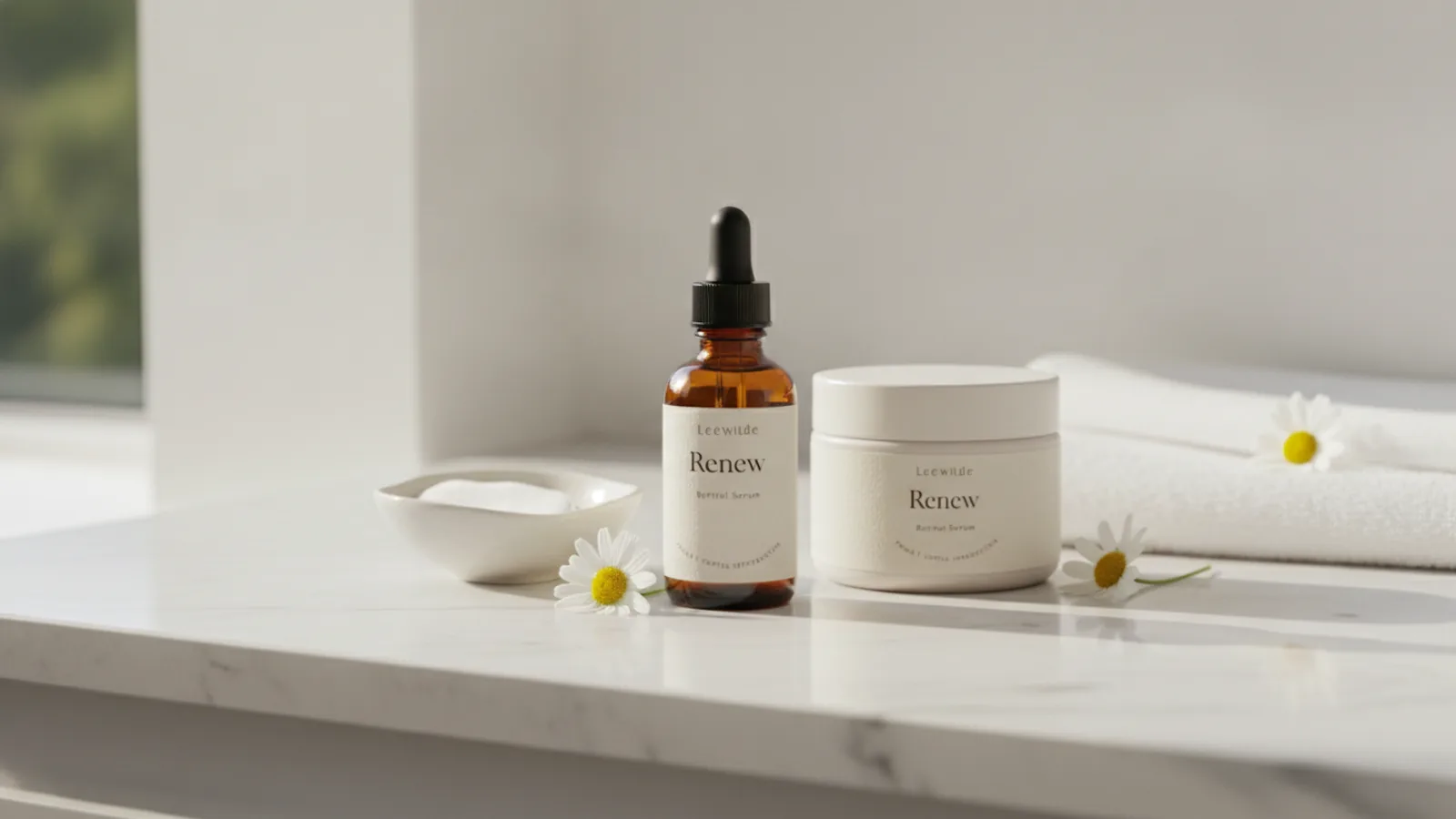
How To Introduce Retinol Slowly
Retinol is a celebrated skincare ingredient known for its ability to improve skin texture, fine lines, and tone. However, it's also powerful and can cause irritation if used improperly. This guide is for anyone new to retinol who wants to add it to their routine safely and gently. We’ll walk you through a step-by-step process to help your skin adjust, minimizing the chance of redness, dryness, and peeling, so you can enjoy all the benefits without the discomfort.
Fast Answer
- Start with: A low concentration (0.01% - 0.03%)
- Frequency: Once per week at night
- Amount: A pea-sized dot for the whole face
- Technique: Use the "sandwich method" (moisturizer, then retinol, then more moisturizer)
- Be patient: Slowly increase use over several weeks or months as your skin adapts
Before You Start
Starting retinol is more about patience than skill. The goal is to let your skin get used to this active ingredient over time. Gathering a few simple products and understanding the process will set you up for success.
- A low-strength retinol product: Look for a serum or cream with a concentration between 0.01% and 0.03%. Products often label themselves as "starter" or "for beginners."
- A gentle, hydrating cleanser: You’ll need a cleanser that cleans your skin without stripping its natural moisture barrier.
- A simple, soothing moisturizer: Choose a moisturizer free of other active ingredients like acids or Vitamin C. Ingredients like ceramides, hyaluronic acid, and glycerin are great choices.
- A broad-spectrum sunscreen: This is non-negotiable. Select a sunscreen with at least SPF 30 that you enjoy wearing every day.
Step-by-Step Instructions
Follow these steps carefully to introduce retinol into your evening skincare routine. Remember, slow and steady is the key to happy, healthy skin.
Choose Your Starting Retinol
Your first step is selecting the right product. For beginners, the concentration is the most important factor. Start with a very low percentage to allow your skin to build tolerance gradually. Look for products clearly labeled with their retinol concentration, ideally in the 0.01% to 0.03% range. Creams are often more gentle and hydrating than serums, which can be a good starting point if you have dry or sensitive skin.
Perform a Patch Test
Before applying retinol to your entire face, it's wise to do a patch test. This helps ensure you don't have an immediate negative reaction to the formula. Apply a small amount of the product to a discreet area of skin, like behind your ear or on your inner arm. Wait 24 to 48 hours and check for signs of unusual irritation, such as intense redness, itching, or hives. A little tingling might be normal, but significant discomfort is a red flag.
Prep Your Skin for Application
Retinol should only be applied at night, as it can break down in sunlight. Start your evening routine by washing your face with your gentle cleanser. After cleansing, pat your skin completely dry with a clean towel. Applying retinol to damp skin can increase its penetration and potentially lead to more irritation, so it's very important to wait until your skin is fully dry. Some people even wait 10-15 minutes after washing their face.
Apply Using the "Sandwich Method"
The sandwich method is a fantastic technique for beginners to buffer the skin against irritation. It involves layering your retinol between two layers of moisturizer. First, apply a thin, even layer of your simple moisturizer to your clean, dry face. Let it absorb for a few minutes. Next, take a pea-sized amount of your retinol product and dot it on your forehead, cheeks, nose, and chin. Gently spread it across your face, avoiding the delicate skin around your eyes, the corners of your nose, and your mouth. Wait another few minutes, then apply a second layer of moisturizer on top.
Start With a Very Slow Schedule
This is the most critical step for success. Your application schedule determines how well your skin will adapt. Overdoing it is the most common mistake people make. Start by applying retinol just once a week for the first two weeks. If your skin feels fine—no significant redness or painful peeling—you can increase to twice a week for the next two weeks (for example, on Mondays and Thursdays). Continue this gradual increase over several months, listening to your skin. If you experience irritation, scale back to your previous frequency.
A sample starting schedule might look like this:
- Weeks 1-2: Apply one night per week.
- Weeks 3-4: Apply two nights per week.
- Weeks 5-8: Apply every other night.
- After 8 weeks: Apply nightly, only if your skin shows no signs of irritation.
Simplify the Rest of Your Routine
While your skin is getting used to retinol, it's best to keep the rest of your routine simple and supportive. Pause the use of other strong active ingredients in the same routine. This includes exfoliating acids (like glycolic, lactic, and salicylic acid), potent Vitamin C serums, and physical scrubs. Your routine should focus on cleansing, moisturizing, and sun protection to keep your skin barrier healthy and resilient.
Wear Sunscreen Every Single Morning
Retinol works by speeding up skin cell turnover, which reveals fresh, new skin cells. This new skin is more delicate and highly susceptible to sun damage. Because of this, wearing a broad-spectrum sunscreen with SPF 30 or higher every day is absolutely essential. This is not just for sunny days or time spent outdoors; you should wear it even on cloudy days or if you're staying inside near windows. Reapply as directed. Skipping sunscreen can reverse your progress and lead to sun damage.
Quick Reference
| Situation | Use this | Why |
|---|---|---|
| It's your first time using retinol. | Start with 0.01%–0.03% strength, once a week. | This minimizes initial irritation and allows your skin's retinoid receptors to adapt slowly. |
| Your skin feels tight, dry, or is flaking. | Use the "sandwich method" or take a few nights off. | This buffers the retinol with moisturizer and gives your skin barrier time to recover. |
| You're experiencing redness or stinging. | Reduce frequency to once every 7–10 days. | This is a sign of irritation. Your skin needs more recovery time between applications. |
| You've used retinol for 3+ months with no issues. | Consider increasing frequency or moving to a slightly higher strength (e.g., 0.05%). | Your skin has likely acclimated and may be ready for the next step to enhance results. |
Common Problems When You Introduce Retinol Slowly
Even with a careful approach, you might encounter a few bumps along the road. Here’s how to handle the most common issues.
Dryness, Flaking, and Peeling
This is often referred to as "retinization," the period where your skin is adjusting. It's very common. To manage it, make sure you are using a rich, barrier-supporting moisturizer. You can also apply a hydrating serum with hyaluronic acid before your moisturizer. If peeling is significant, take a 3-5 day break from retinol to let your skin heal, then restart at a lower frequency.
Redness and Stinging
A little bit of pinkness can be normal, but if your skin stings upon application or when you apply other products (like your moisturizer), you're pushing it too hard. This means your skin barrier is compromised. Stop using retinol immediately until all stinging and redness have subsided. When you restart, reduce your frequency significantly—perhaps to once every 10 days—and be diligent with the sandwich method.
Breakouts or "Purging"
Retinol can sometimes cause an initial increase in breakouts, known as "purging." Because retinol accelerates cell turnover, it can bring underlying micro-comedones to the surface more quickly. Purging typically occurs in areas where you normally get pimples and should only last for 4-6 weeks. If you are breaking out in new places, or if the breakouts are very inflamed and last longer than 6 weeks, it may be an irritation response. In that case, it's best to stop and consult a dermatologist.
Advanced Tips for Using Retinol
Once your skin has fully acclimated to your starting retinol after several months of consistent use without irritation, you might consider these next steps.
- Graduate from the Sandwich Method: For a more potent effect, you can try applying retinol directly to clean, dry skin and then follow up with your moisturizer after it has fully absorbed.
- Slowly Increase the Strength: If you've been using a low-strength retinol for at least 3-6 months and want to see more results, you can consider moving up to a mid-strength product (e.g., 0.05% to 0.1%). Introduce the new strength just as you did the first one: once a week, and build up slowly from there.
- Re-introduce Other Actives Carefully: Once your skin is completely comfortable with nightly or near-nightly retinol use, you can consider adding other active ingredients back into your routine. A common approach is to alternate nights. For example, use retinol one night and an exfoliating acid the next. Never use them in the same routine at the same time.
- Buffer Sensitive Areas: The skin around your eyes, nostrils, and mouth is thinner and more sensitive. Before applying retinol, you can protect these areas by applying a thin layer of a thick balm or petroleum jelly to act as a barrier.
How To Introduce Retinol Slowly FAQ
How long does it take to see results from retinol?
Patience is essential. While you may notice some changes in skin texture within a few weeks, more significant results, such as improvement in fine lines and dark spots, typically take 3 to 6 months of consistent use. Think of it as a long-term investment in your skin's health.
Can I use retinol in the morning?
No, retinol should only be used in your nighttime routine. Retinol can be destabilized by UV light, making it less effective. More importantly, it makes your skin more sensitive to the sun, so applying it in the morning would increase your risk of sun damage.
What's the difference between retinol and retinoids?
"Retinoid" is the umbrella term for a class of Vitamin A derivatives. Retinol is a type of retinoid that is available over-the-counter. Other over-the-counter retinoids include retinyl palmitate (weaker) and retinaldehyde (stronger). Prescription-strength retinoids, like tretinoin, are more powerful and require a doctor's supervision.
What if my skin never gets used to it?
Retinol isn't suitable for everyone, and that's okay. If you've tried introducing it slowly and carefully but your skin remains persistently red, irritated, or uncomfortable, it may not be the right active for you. There are other wonderful ingredients that can offer anti-aging benefits, such as bakuchiol (a plant-based alternative), peptides, and niacinamide.
Final Checklist for Introducing Retinol Slowly
Use this checklist to ensure you're on the right track as you begin your retinol journey.
- You have chosen a low-strength retinol (0.01% - 0.03%).
- You have performed a patch test before facial application.
- You are applying only a pea-sized amount at night to clean, dry skin.
- You are starting with a once-a-week application schedule.
- You are increasing frequency no faster than every two weeks.
- You have paused the use of other exfoliants and strong actives.
- You are applying a broad-spectrum SPF 30+ sunscreen every morning.
- You are monitoring your skin for signs of irritation and are prepared to scale back if needed.