
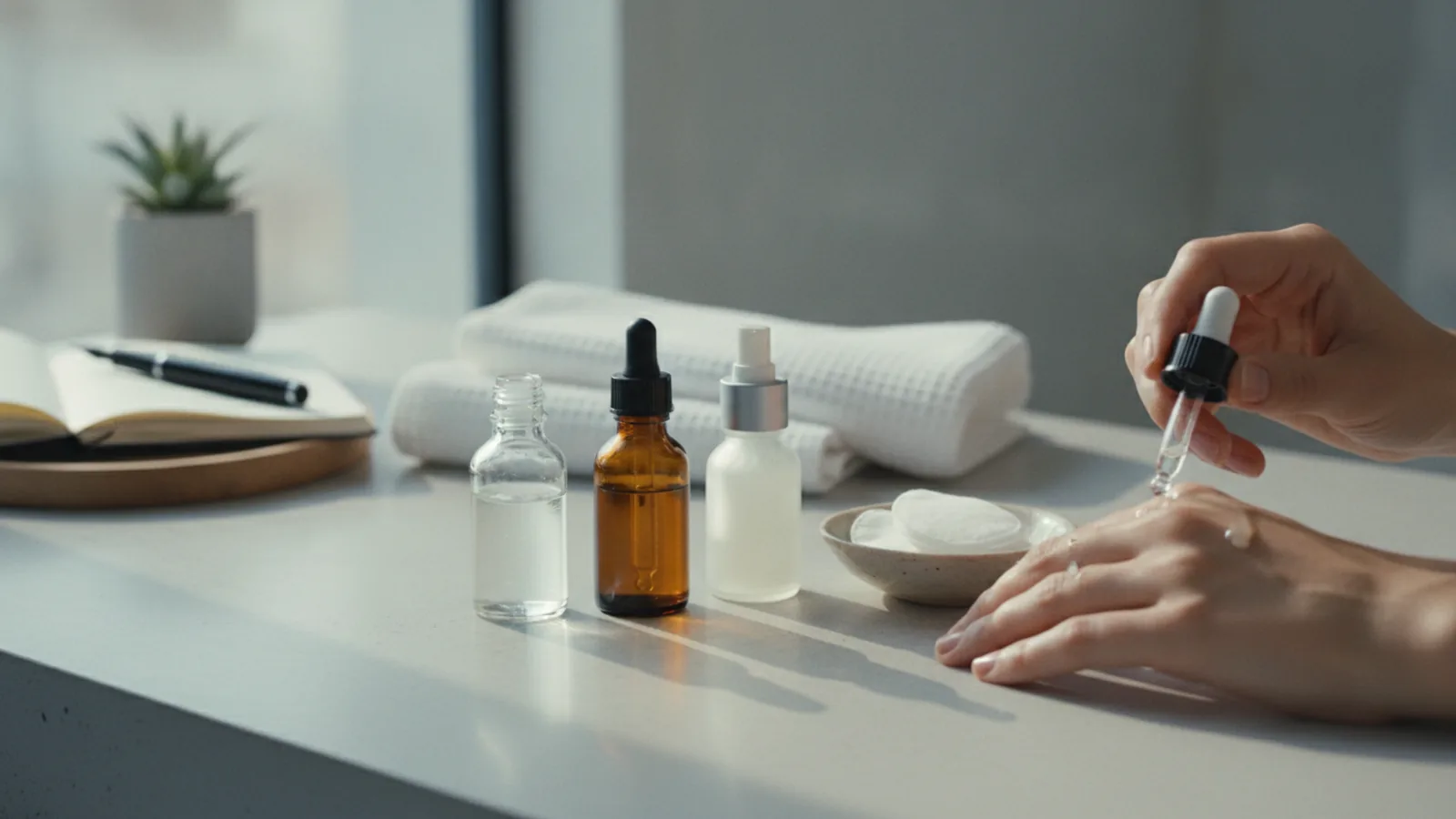
How To Use Exfoliating Acids
Welcome to the world of exfoliating acids. This guide is for you if you're curious about chemical exfoliants but feel a little unsure where to start. We'll walk you through how to safely add these powerful ingredients to your routine for smoother, brighter, and clearer skin. Think of this as a calm, practical starting point to help you get the glow you want without the irritation you don't. We'll cover everything from choosing the right acid to applying it correctly and protecting your skin.
Fast Answer
- Start slow: Use a low-strength acid only 1-2 times per week at night.
- Protect your skin: Always wear a broad-spectrum sunscreen with SPF 30+ the next day.
- Listen to your skin: Stop using the product if you notice persistent stinging, redness, or peeling.
Before You Start
Setting yourself up for success is simple. Before you open that new bottle, let's make sure you have the basics covered and understand the most important safety check.
What You Need
- A Gentle Cleanser: You'll need a mild, non-stripping cleanser to wash your face before application.
- Your Exfoliating Acid: This could be a toner, serum, or pre-soaked pad containing an AHA, BHA, or PHA.
- A Soothing Moisturizer: A simple, fragrance-free moisturizer will help calm and hydrate your skin afterward.
- Broad-Spectrum Sunscreen: A sunscreen with at least SPF 30 is essential to protect your skin every morning.
Safety, Timing, and Context Checks
A little caution goes a long way in skincare. Using acids makes your skin more sensitive, so these checks are not optional.
- Don't mix actives at first. Avoid using your exfoliating acid in the same routine as other strong ingredients like retinoids (retinol), vitamin C, benzoyl peroxide, or other scrubs and exfoliants. This can lead to irritation.
- Apply at night. It's best to use exfoliating acids in your evening routine. This gives your skin time to recover overnight and reduces immediate sun sensitivity.
- Check with a professional if needed. If you have a skin condition like rosacea or eczema, or if you are pregnant or breastfeeding, it's always wise to consult a dermatologist before starting new active skincare.
Step-by-Step Instructions
Ready to begin? Follow these steps for a safe and effective application. This gentle approach helps your skin adapt without feeling overwhelmed.
Start with a Clean, Dry Face
Your journey begins with a clean slate. Wash your face with your gentle cleanser and lukewarm water to remove any makeup, dirt, and oil. Afterward, gently pat your skin completely dry with a clean towel. Applying acids to damp skin can increase penetration and potentially cause more irritation, so make sure your face feels fully dry to the touch.
Perform a Patch Test (First Time Only)
If you haven't already, this is the moment to do your patch test. Take a tiny amount of the exfoliating acid product and apply it to a small, hidden patch of skin. Good spots include the area just behind your ear or on the side of your neck. Leave it on as directed (or rinse if it's a mask) and wait at least 24 hours. If you don't see any signs of a negative reaction like a rash, excessive redness, or bumps, you're ready to proceed with a full application.
Apply a Small, Even Layer
When it comes to acids, less is truly more. Dispense a small amount of the product. For a serum, a pea-sized amount is plenty for your entire face. For a toner, lightly dampen a cotton pad—it shouldn't be dripping wet. Gently sweep the product over your face, avoiding the delicate skin around your eyes, nostrils, and lips. Do not rub or scrub. A thin, even layer is all you need.
Wait for It to Absorb
Give the acid a moment to work its magic. Before moving on to the next step in your routine, let the product fully absorb into your skin. This usually takes anywhere from 1 to 5 minutes. Your skin should feel dry to the touch again, not sticky or wet. This waiting period ensures the acid can work at its intended pH without being diluted by your moisturizer.
Follow with a Soothing Moisturizer
After the acid has absorbed, it's time to hydrate and support your skin barrier. Apply a generous layer of your simple, soothing moisturizer. Look for ingredients like ceramides, hyaluronic acid, or glycerin. A good moisturizer will lock in hydration, reduce potential dryness, and keep your skin feeling calm and comfortable.
Use Sunscreen Every Single Morning
This is the most critical step. Chemical exfoliants slough away dead skin cells, revealing fresh, new skin underneath. This new skin is much more vulnerable to sun damage. You must apply a broad-spectrum sunscreen with an SPF of 30 or higher every morning as the final step in your routine. This is non-negotiable, even if you're staying indoors or the weather is cloudy.
Start Slowly and Observe Your Skin
Consistency is more important than intensity. Begin by using your new exfoliating acid just once or twice a week. Pay close attention to how your skin looks and feels in the following days. Is it glowing and smooth? Or is it tight, red, and flaky? Your skin's feedback is your best guide. If all is well after a few weeks, you could consider increasing the frequency to three times a week, but many people find that 1-2 times is the perfect amount for maintenance.
Quick Reference
Not sure which acid is right for you? This simple chart can help you choose based on your main skin concerns.
| Skin Concern | Try This Acid Type | Why It Works |
|---|---|---|
| Dullness, uneven texture, fine lines | AHA (Glycolic, Lactic Acid) | They are water-soluble and work on the surface of the skin to smooth texture and boost radiance. |
| Clogged pores, blackheads, acne | BHA (Salicylic Acid) | It's oil-soluble, allowing it to penetrate deep into pores to clear out oil and debris. |
| Sensitive, easily irritated skin | PHA (Gluconolactone, Lactobionic Acid) | Their larger molecule size means they penetrate more slowly, offering gentle exfoliation with less irritation. |
Common Problems When You Use Exfoliating Acids
Even with a careful approach, you might run into a few bumps. Here’s how to troubleshoot some common issues.
My Skin Stings or Burns When I Apply It
A mild, temporary tingling for a few seconds can be normal. However, if the sensation feels like burning or lasts for more than a minute, you should rinse the product off immediately with cool water. This could be a sign that the product is too strong for your skin, you applied too much, or your skin barrier is compromised. Give your skin a few days to rest with only a gentle cleanser and moisturizer before trying again with a smaller amount or a gentler product.
My Skin is Red, Flaky, and Peeling
These are classic signs of over-exfoliation. You’ve damaged your skin’s protective barrier. The solution is to stop using all active ingredients immediately—that means no acids, no retinoids, no scrubs, and no vitamin C. Pare your routine back to the absolute basics: a gentle cleanser, a rich moisturizer, and sunscreen. It may take a week or more for your skin to heal. Once it feels calm and balanced again, you can slowly reintroduce your acid, starting with just once a week.
I'm Breaking Out More Than Usual
This could be one of two things: irritation or purging. If you're getting breakouts in areas you don't normally get them, it’s likely irritation. Stop using the product. However, if you're seeing a temporary flare-up of small pimples in your usual breakout zones, it might be skin purging. This happens when the acid speeds up cell turnover, pushing underlying congestion to the surface. Purging should resolve within 4-6 weeks. If it lasts longer, it's probably irritation.
I'm Not Seeing Any Results
Skincare is a marathon, not a sprint. It can take at least 4-8 weeks of consistent use to see noticeable changes in skin texture and tone. Be patient and stick with your routine. Also, check the product's expiration date and make sure you're applying it correctly (on dry skin) and consistently. If after a couple of months you still see no difference, you might consider trying a product with a slightly higher concentration or a different type of acid.
Advanced Tips for Exfoliating Acids
Once you're comfortable with the basics, you might want to explore these more advanced techniques. Only try these after your skin has fully adjusted to your initial routine.
Try "Skin Cycling"
Skin cycling is a popular method for incorporating actives without causing irritation. A typical four-night cycle looks like this:
- Night 1: Exfoliate (use your acid).
- Night 2: Retinoid (if you use one).
- Night 3 & 4: Recover (use only a gentle cleanser and moisturizer).
Use Different Acids on Different Areas
If you have combination skin, you can tailor your application. For example, you could use a BHA (salicylic acid) on your oilier T-zone to help with blackheads and use a gentler AHA (lactic acid) on your drier cheeks for hydration and brightness. Only attempt this once you know how your skin reacts to each acid individually.
Consider "Contact Therapy"
If your skin is very sensitive or you're using a high-strength product, contact therapy can be a great option. Instead of leaving the acid on overnight, you apply it to clean skin, let it sit for 5-10 minutes, and then rinse it off with water. You'll still get some of the exfoliating benefits but with a much lower risk of irritation.
How To Use Exfoliating Acids FAQ
Can I use exfoliating acids every day?
What is the difference between physical and chemical exfoliation?
Can I use an exfoliating acid with my vitamin C serum?
Do I need to wash the acid off?
Final Checklist for How To Use Exfoliating Acids
Refer back to this checklist anytime you need a quick reminder. Following these core principles will help you get the best results while keeping your skin happy and healthy.
- You have chosen an acid that matches your skin's needs (AHA, BHA, or PHA).
- You performed a patch test on a small area of skin before your first use.
- You are starting slow, using the acid only 1-2 times per week and only at night.
- You always apply the product to a completely clean and dry face.
- You are careful to apply just a thin, even layer and avoid the eye area.
- You always follow up with a simple, hydrating moisturizer.
- You are committed to wearing broad-spectrum SPF 30+ sunscreen every single morning.
- You are listening to your skin and will take a break if you see signs of irritation.